

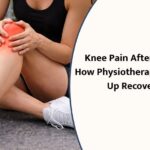


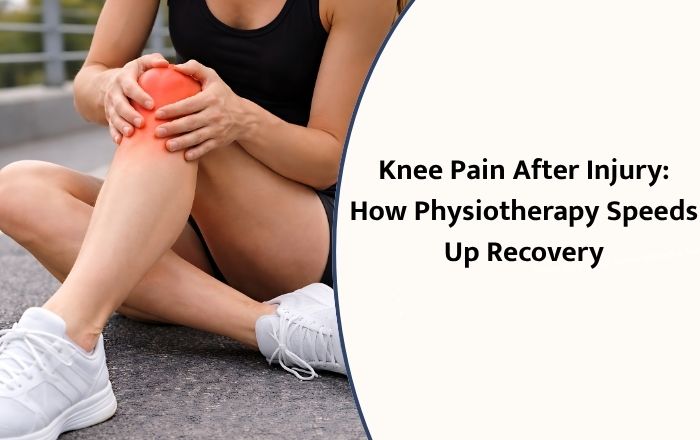
A twist during a weekend football match. A slip on wet stairs. A sudden jolt while getting off a two-wheeler. Knee injuries rarely give a warning, and one moment you’re fine, the next you can’t bend your leg without wincing. Knee pain after injury is one of the most common reasons people visit our clinic in Magarpatta, and here’s the reassuring part: most of these injuries heal well when they’re assessed early and treated the right way.
Why Does Your Knee Hurt After an Injury?
Your knee hurts after an injury because one or more of its structures, such as a ligament, the cartilage, a tendon or the joint lining, has been stretched, torn or bruised. Swelling and pain are the body’s way of protecting the area while healing begins.
The knee is a hinge joint held together by four main ligaments, two rubbery cushions called menisci, and strong tendons that connect your thigh muscles to the shinbone. Because it carries your full body weight and also twists and pivots, it takes a lot of load. The injuries we see most often include:
- Ligament sprains, especially the ACL and MCL, common in football, badminton and cricket
- Meniscus tears, usually from twisting while the foot stays planted
- Patellar tendon strain from jumping, sprinting or sudden stops
- Bruising from a direct fall onto the knee
- Kneecap slipping out of place (patellar dislocation)
Knee Pain After Injury: Which Symptoms Need a Physiotherapist?
You should see a physiotherapist if the pain lasts more than two or three days, the swelling keeps coming back, the knee locks, clicks or gives way, or you can’t put full weight on the leg.
Some signs need a doctor’s review first. If you heard a loud pop at the moment of injury, the knee swelled up badly within a few hours, or it looks out of shape, get it checked with an X-ray or MRI. Physiotherapy then works alongside your orthopaedic care, not in place of it.
How Does Physiotherapy Speed Up Knee Injury Recovery?
Physiotherapy speeds up recovery by controlling pain and swelling early, restoring movement before stiffness sets in, and rebuilding the muscles that protect the joint. A structured plan also lowers the chance of hurting the same knee again.
Here’s how a typical programme moves forward.
1. Early Pain and Swelling Control
In the first few days, the focus is on calming the joint. Ice, compression, elevation and gentle movement help reduce swelling. Your physiotherapist may also use TENS, IFT or therapeutic ultrasound to ease pain without leaning heavily on painkillers.
2. Getting Movement Back
A swollen knee stiffens quickly. Gentle heel slides, assisted bending and manual therapy help restore your range of motion step by step, so you can sit, climb stairs and walk normally again.
3. Rebuilding Strength
After an injury, the thigh muscle often “switches off” to protect the joint. That’s why quadriceps strengthening is a big part of rehab, along with work for the hamstrings, hips and calves. Strong muscles take load off healing tissue. You can find more on this in our guide to physiotherapy exercises for weak knees.
4. Balance and Stability Training
Injured ligaments lose some of their ability to sense joint position. Proprioception training, like single-leg standing and wobble board work, retrains that sense and makes the knee feel steady and trustworthy again.
5. Safe Return to Sport and Daily Life
The final stage uses squats, step-ups, lunges and, for athletes, running and change-of-direction drills. You go back to full activity only when strength and control are ready, not just when the pain fades.
How Long Does Recovery Take With Physiotherapy?
Mild sprains usually settle in two to six weeks. Moderate ligament or meniscus injuries often need six to twelve weeks of rehab, and recovery after ACL reconstruction can take six to nine months.
Every knee is different. Age, fitness, the type of injury and how regularly you do your home exercises all affect the timeline. If you’ve had surgery, a guided post-operative physiotherapy plan makes a real difference to how quickly and fully you recover.
What Should You Avoid After a Knee Injury?
Avoid heat and deep massage in the first 48 hours, since both can increase swelling. Don’t return to sport just because painkillers have dulled the pain. Early on, go easy on deep squats, sitting cross-legged and running up and down stairs. And don’t stop your exercises the moment you feel better. That’s the most common reason people end up injuring the same knee twice.
Knee Injury Physiotherapy in Magarpatta, Pune
We see patients from Magarpatta City, Hadapsar, Amanora, Kharadi, Mundhwa and Kondhwa with all kinds of knee injuries. Many are IT professionals who got hurt playing weekend sports, runners training for city marathons, and older adults who twisted a knee on the stairs.
At his clinic, Dr. Ranjeet Ghatge starts with a detailed assessment of how your knee moves, where it’s weak and what caused the injury. Your treatment plan is then built around your goals, whether that’s playing again, walking without a limp or managing daily chores comfortably. Learn more about our knee pain physiotherapy treatment in Magarpatta, or read how we approach sports injury rehabilitation.
Frequently Asked Questions (FAQ)
1. Should I rest completely after a knee injury?
No. Short rest in the first day or two helps, but complete rest for weeks weakens the muscles and stiffens the joint. Gentle, guided movement usually leads to faster recovery.
2. Can physiotherapy heal a torn ligament without surgery?
Many partial ligament tears and some meniscus tears recover well with physiotherapy alone. Complete ACL tears in active people may need surgery, followed by rehab. Your assessment and scans will guide the decision.
3. Should I use ice or heat for knee pain after an injury?
Use ice for the first 48 to 72 hours to control swelling. Heat is better later on for stiffness, once the swelling has settled.
4. How many physiotherapy sessions will I need?
It depends on the injury. Mild sprains may need a handful of sessions, while ligament or post-surgery rehab can run for several weeks. You’ll get a clear plan after your first visit.
5. When can I start running again?
Usually once you can walk, climb stairs and do single-leg squats without pain or wobbling. Your physiotherapist will test your strength and balance before clearing you to run.
Get Your Knee Back to Full Strength
You don’t have to wait and hope the pain goes away on its own. The sooner you start the right treatment, the smoother and quicker your recovery tends to be.
Book a consultation with Dr. Ranjeet Ghatge, an experienced physiotherapist in Magarpatta, Pune, and get a personalised recovery plan for your knee.